
Battersea Power Station at Night
A Brief History …
Battersea Power Station's iconic status is rooted in a blend of its architectural scale, design, and cultural significance. It’s presence on the cover of Pink Floyds’ 1977 album ‘Animals’ made it recogniseable around the world.
Work on the coal-fired power station began in 1929 with the first half, 'Battersea A', opening in 1935. The second half, 'Battersea B', was completed in 1955, finalising the structure's famous four-chimney silhouette. The design, partly by renowned architect Sir Giles Gilbert Scott (also known for the red telephone box), was striking and featured impressive Art Deco interiors, earning it the nickname the "Temple of Power”
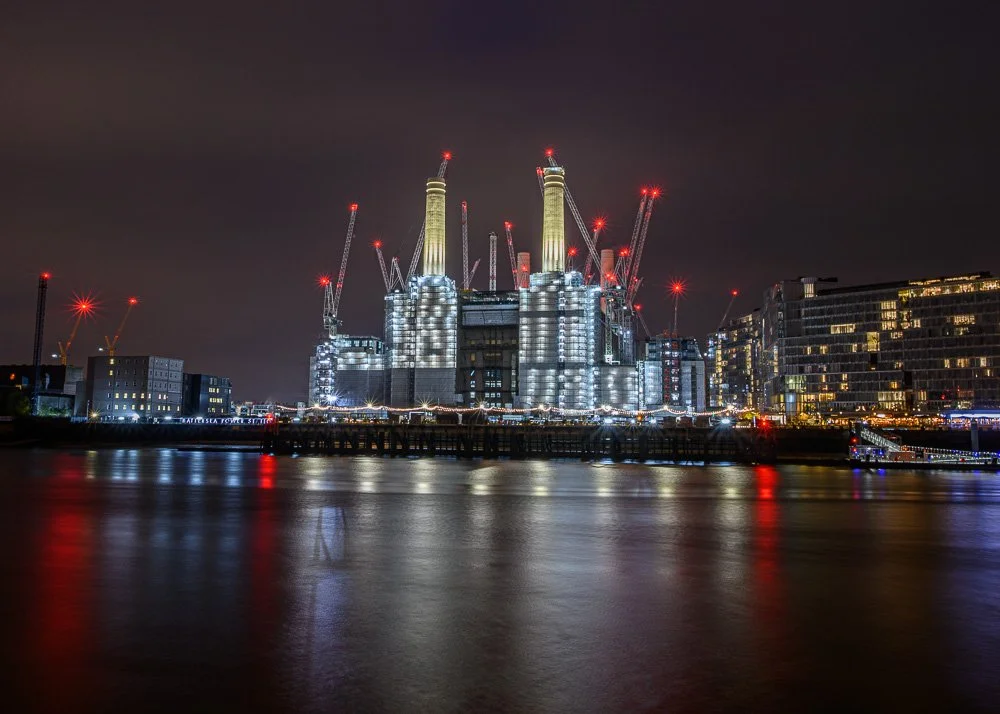
Under redevelopment in 2019
The power station stopped producing electricity in 1983 and the Grade II listed building lay abandoned for years despite several redevelopment proposals
Eventually, it was transformed over a period of eight years, and at a cost of 9 billion pounds, into a mixed-use development including retail, dining, offices and residential facilities.
It opened again on October 14th 2022
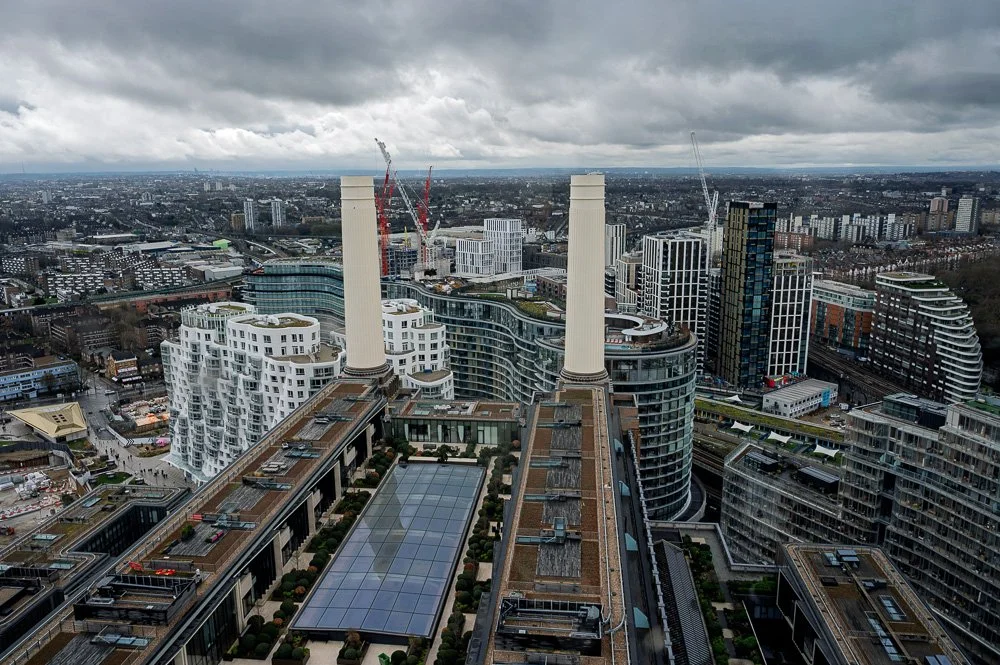
One of the four towering chimneys now includes a glass elevator "The Chimney Lift" that ascends to the top for panoramic 360-degree views of London
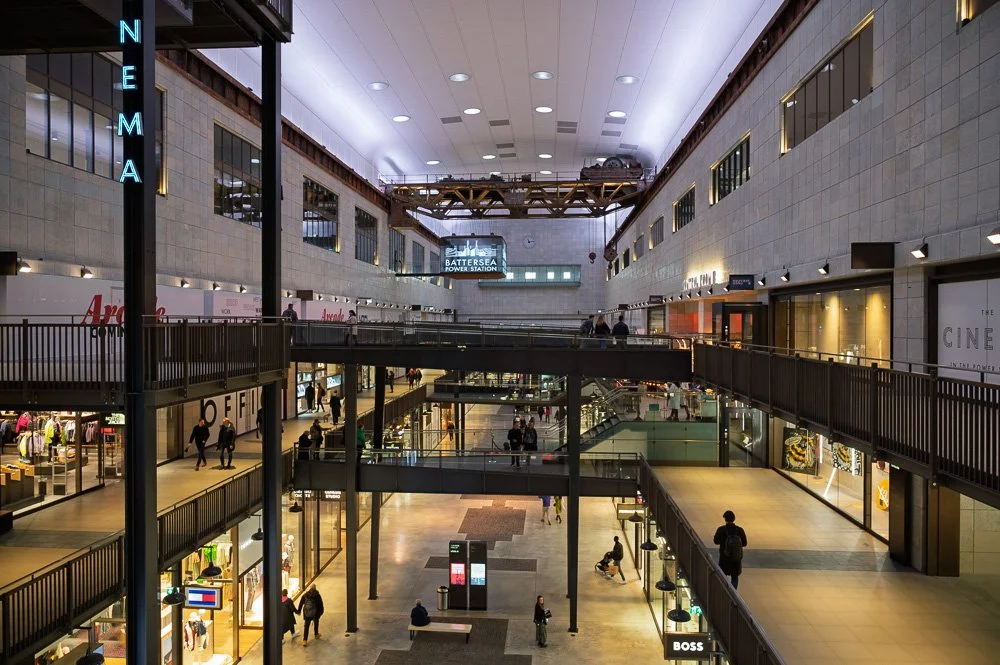
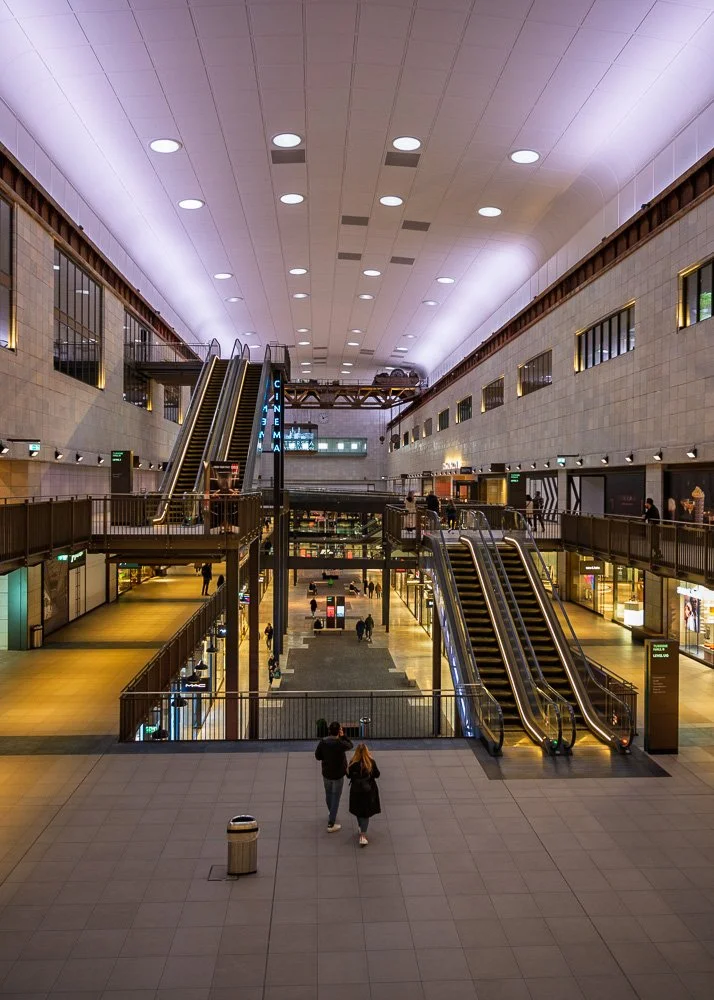
Parts of the old machinery were kept within the new design
Location
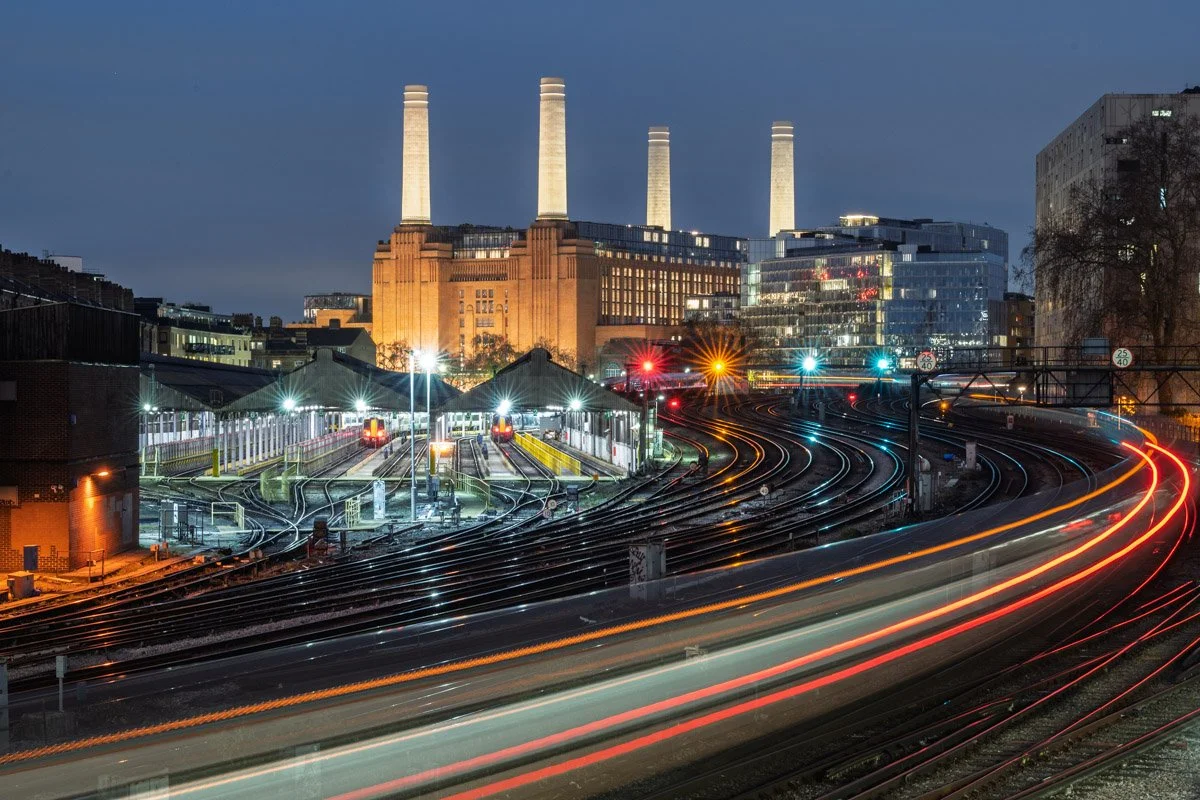
One of the best places to photograph the Power Station is from Ebury Bridge, 900 meters North of the complex
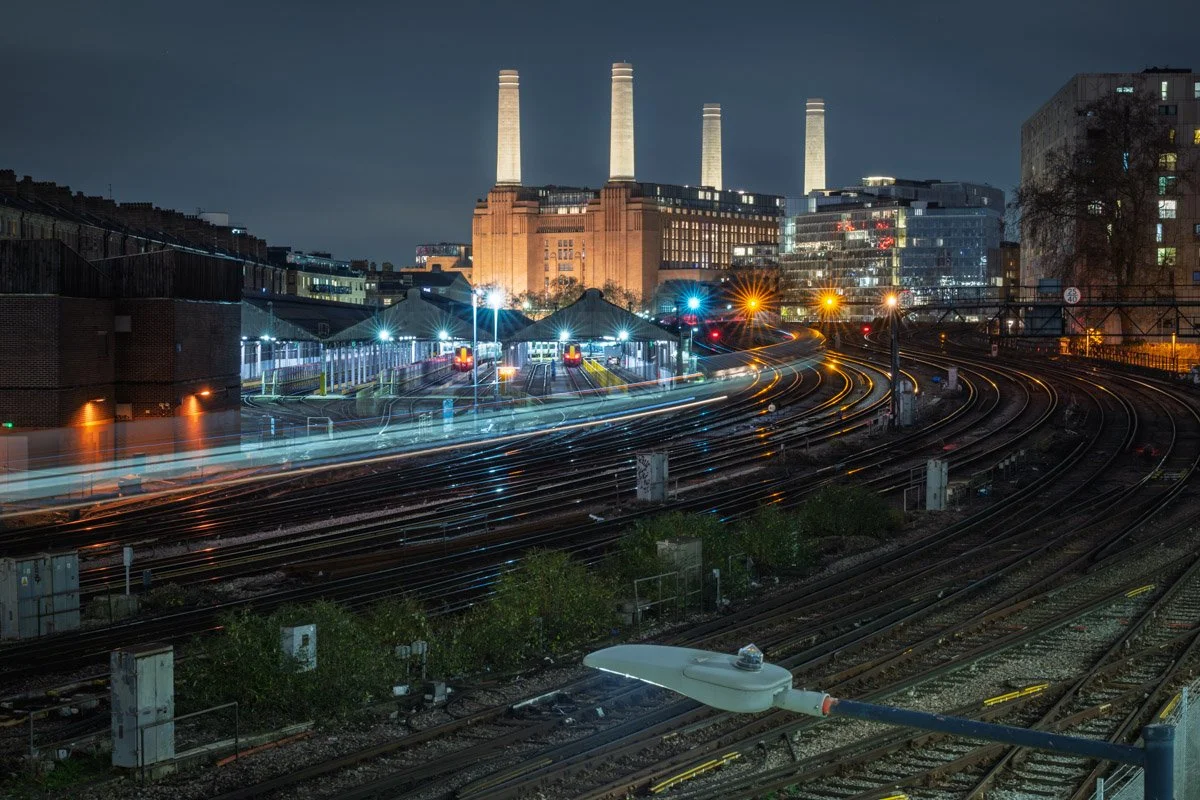
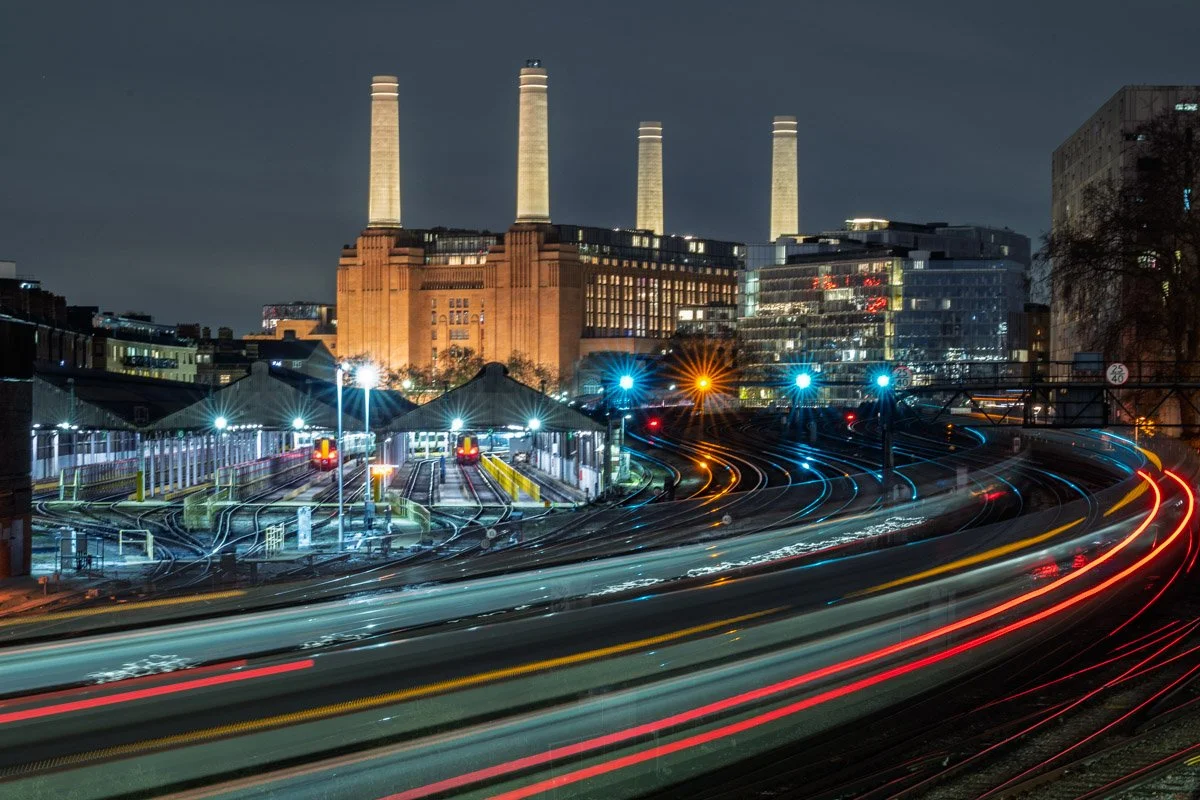
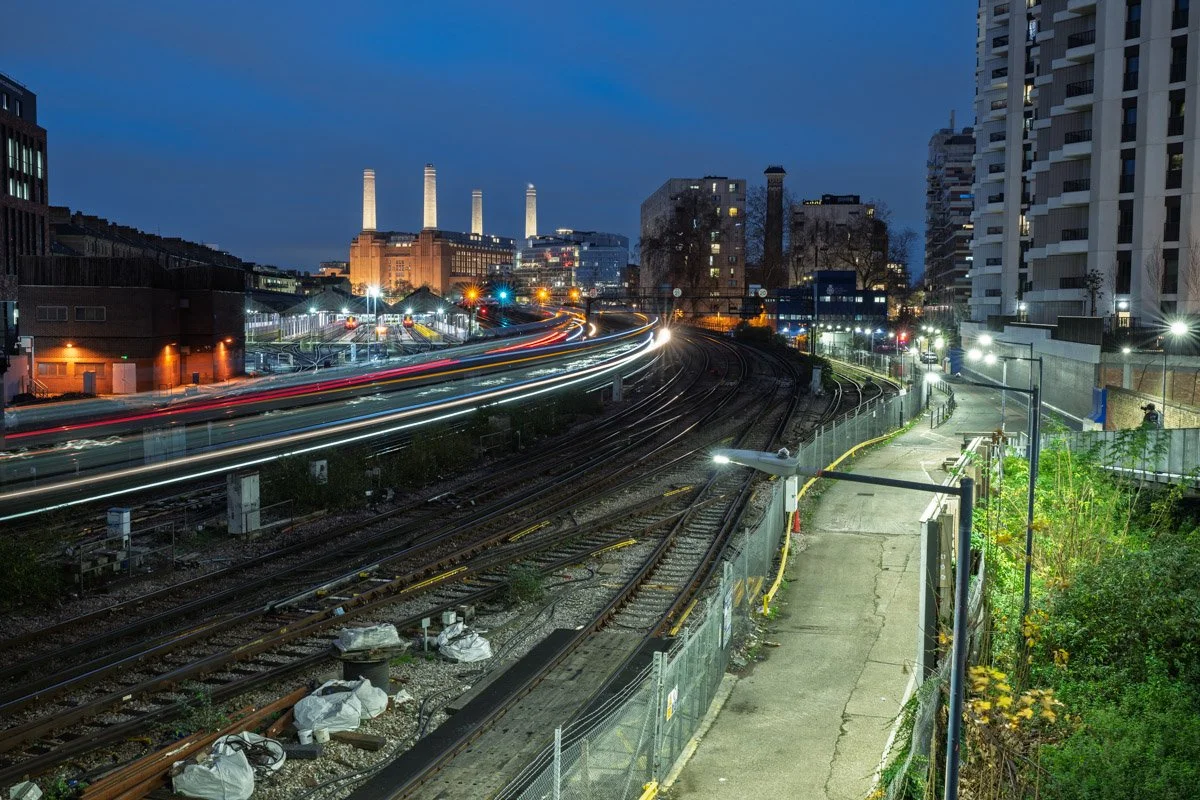
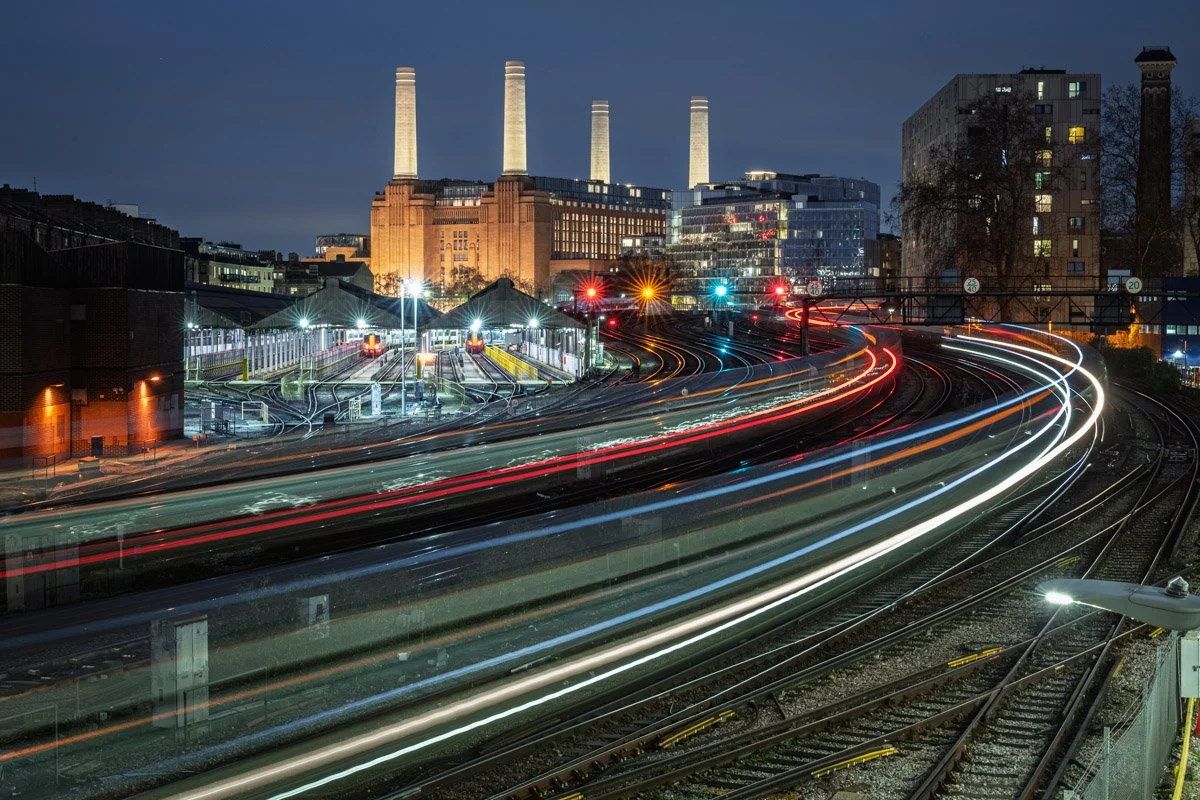
This is a spot well known to many London photographers as it offers an iconc view of the power station, as well as a forground of railway lines appearing to curve towards the building
This makes a great composition
what3words https://w3w.co/rubble.sunk.talked
Timing
The best light is around sunrise and sunset, particularly the ‘blue hour’
The blue hour occurs after sunset, when the sky gradually turns a deep blue before all colour goes completely
Photographing during this time gives a much more interesting look and colour to the sky
In reality the blue hour only lasts about 10 to 15 minutes , so make sure you are at the location and ready to shoot as the light fades
A google search will give you the times for the blue hour, or use the excellent PhotoPills app
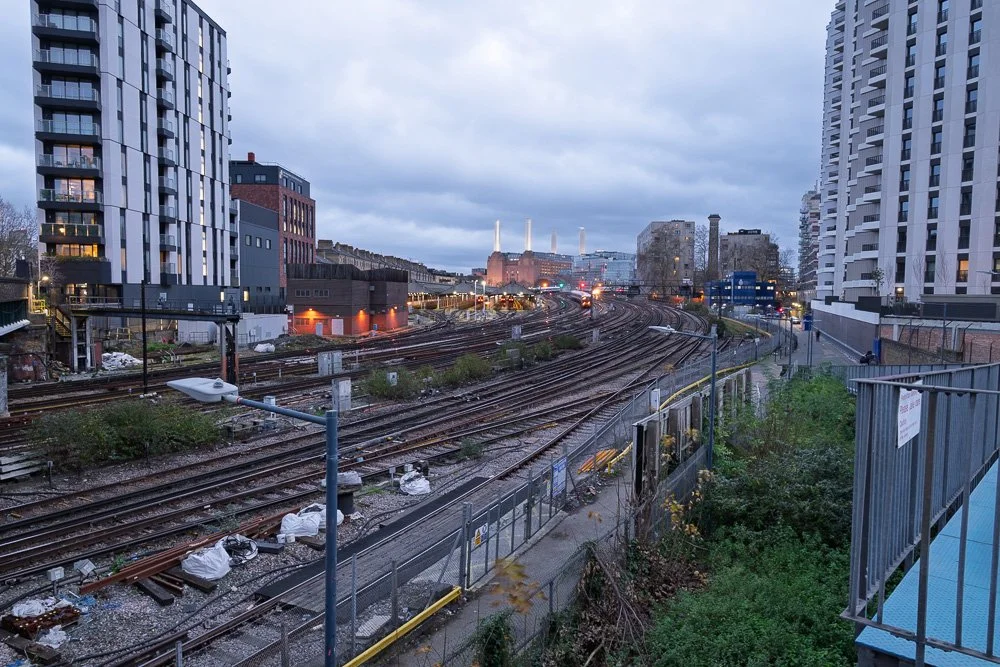
Before the blue hour the light isn’t good, particulartly if it’s overcast
Camera Settings
Camera on a tripod
You’ll be taking long exposures, probably anything up to 30 seconds, so sturdy tripod is essential
ISO
Keep your ISO as low as possible (usually ISO 100 or 200)
Shutter Speed
Use a long shutter speed (5 to 30 seconds) to let light in naturally without adding digital noise
Aperture
f/8 to f/11 are considered the sweet spot for most lenses giving a good depth of field and maximum sharpness
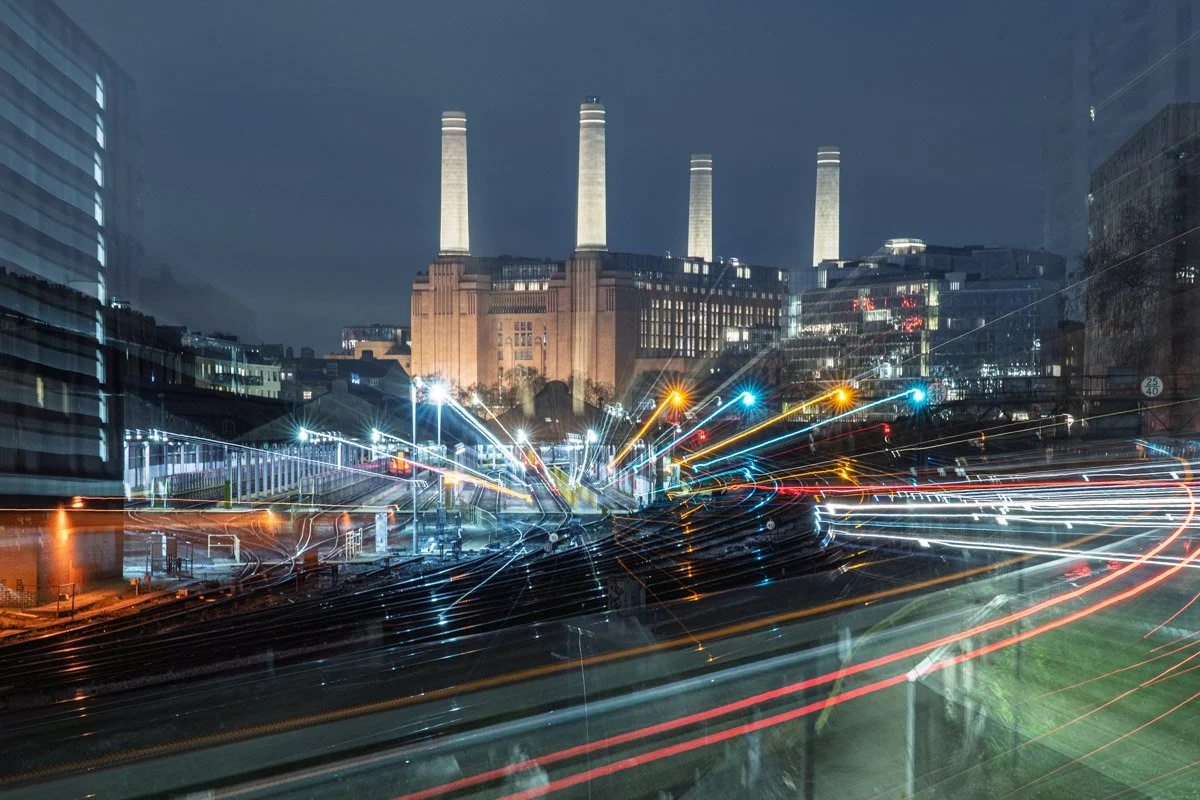
However you may like to reduce the aperture size to say f16, to create more pronounced starbursts on points of light in the scene
Experiemnt with different apertures to see what you prefer
Note : With smaller apertures, say above f16, you are liable to encounter diffraction
As light passes through a tiny opening, it "bends" and scatters around the edges of the aperture blades, and instead of hitting a single pixel cleanly, the light ‘fans out’ and can overplap onto neighbouring pixels
This results in a softer image
The Final Images
Settings
20 to 30 seconds f16 ISO 64
Equipment
Nikon Z8
Nikon 24-70 f2.8
Manfrotto tripod
Sirui AM-223L tripod (small to rest on walls)
